
01242 708468
Knowledge Centre / Babies and newborns / Baby Photography: Capturing Their First Year
A guide from Two Front Teeth Photography, Cheltenham.
By John MooreDD Month YYYY5 min read
In short
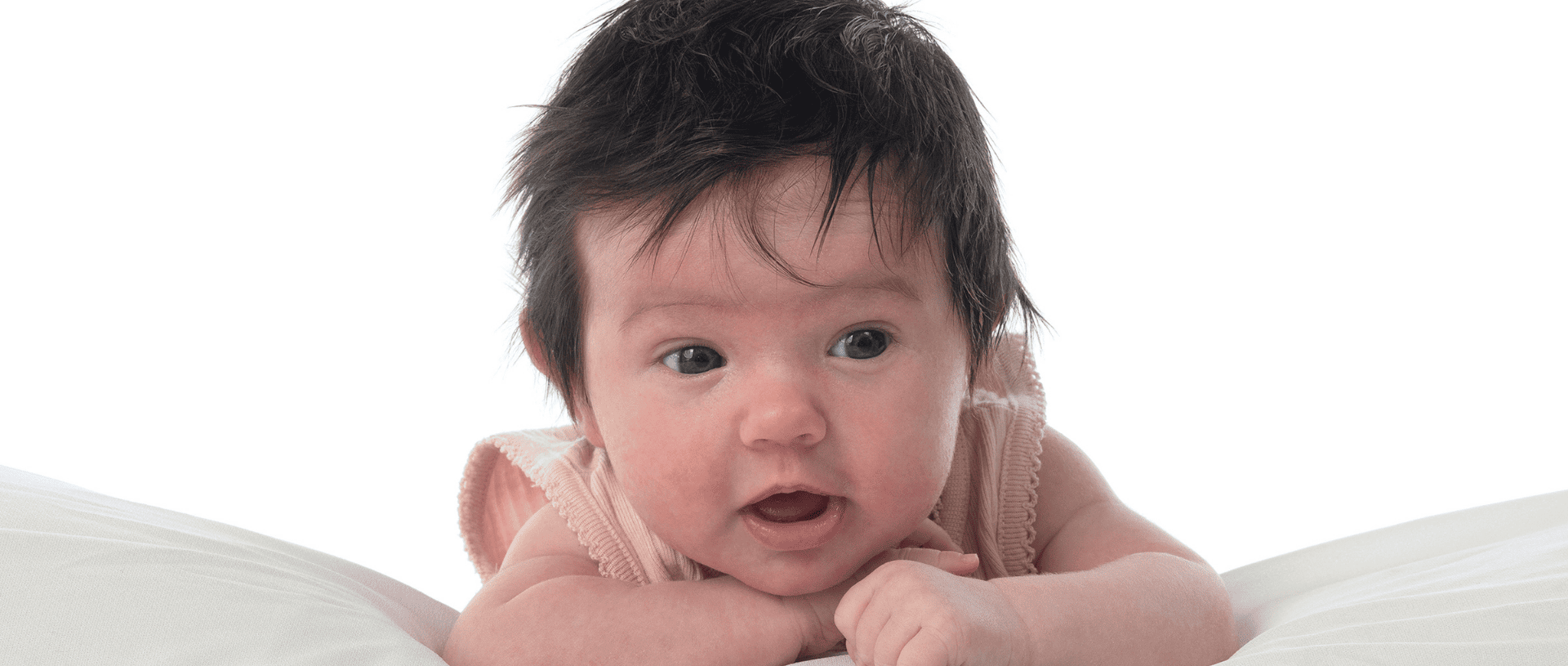
Baby photography covers the first year, with four lovely stages: newborn at around 9–14 days, three to four months, six to seven months, and around their first birthday. We plan sessions around feeds and naps, follow your baby’s lead and welcome parents into the photographs too.
The first year goes by incredibly quickly. One minute you are bringing your tiny newborn home, and before you know it they are sitting, giggling and finding their feet. I tend to think of baby photography as the first year, before they really get walking. There are four lovely stages to photograph, and each one captures something quite different.
There is a photograph of me taken in January 1970. My dad is holding me beside the upstairs bedroom window at my parents’ house, and I am wrapped in a terry-towel nappy. I think my mum took it. It is one of the very few newborn photographs of me.
Years later, when my son Harry was born, we recreated it. My parents were still in the same house. We bought a terry-towel nappy, wrapped Harry in it and stood by the very same window. We even tried to match the angle and the view outside. The two pictures, taken roughly 28 years apart, are incredibly special to me. That is why I always say these photographs are not just for now. They are for the years ahead.
The funny thing is, when we compare the photos, we look very, very similar to each other!
Newborn portraits capture just how small your baby was at the very beginning: tiny hands, tiny feet, sleepy expressions and the feeling of welcoming somebody new into the family. The ideal window for traditional newborn photographs is often around 9–14 days after birth. Babies arrive when they are ready, of course, so I recommend getting in touch during pregnancy and making a provisional plan. Keep us updated as the due date gets nearer and let us know once baby has arrived so we can agree a suitable session date.
Bring anything with a story behind it: perhaps a jumper knitted by great-gran, a little pair of handmade booties, a first cuddly toy or even a scan photograph. They can make these pictures even more meaningful. We keep newborn sessions flexible, with time for feeding, changing and cuddles.
Of course babies aren’t smiling at this age, but it’s all about their newborn look rather than personalities. Although it is sometimes nice to get a crying picture!
I remember doing a photo shoot once and we got lots of nice photos, and in one of the pictures the baby was screaming. At the time, parents dismissed the photo and said, “Oh, I think we’ll go for the other ones.”
But when they came back for the viewing, they fell in love with the picture. We turned it into a black and white image and it looked almost like a documentary-style picture of the baby crying, and they had it as their main feature picture to put up on the wall.
Once your baby can lift their head and push up a little during tummy time, we can make some lovely portraits lying on their tummy. We can also photograph them from above on a blanket, with a favourite little toy nearby. They may not be holding things properly yet, but those early expressions are worth capturing.
This is one of my favourite ages to photograph. Babies are increasingly expressive, full of smiles and beginning to show their personalities. Many are learning to sit, sometimes with a little support from a parent. We can capture close-ups, wider portraits, and pictures with parents and siblings. We work with what your baby can comfortably do rather than expecting them to sit or pose in a particular way.
By around a year, some babies are standing with support, pulling themselves up or even taking their first steps. We can take portraits sitting, standing with a parent holding their hands, or standing between mum and dad. Every baby develops at their own pace; there is no need for them to be walking for us to create lovely photographs.
For newborns, try to give your baby a good feed before coming in. If you bottle-feed, bring enough milk and bottles for another feed while you are here. If you are breastfeeding, you are welcome to stop and feed whenever needed. There is no expectation that a newborn will arrive and be photographed without a break.
For older babies, the biggest tip I can give is to plan the appointment around their naps. If possible, choose a time shortly after they normally wake up, when they are refreshed. Try not to book for a time when they are usually tired.
Bring a few outfits. We can talk through which ones might work best with our different backgrounds, props and any family photographs you would like. Extra changes are useful for a more everyday reason too: babies do sometimes bring their lunch back up! We have baby-changing facilities at the studio, including a selection of nappies and wipes.
A personalised blanket with a name or date of birth, wooden letters to spell out baby’s name, an heirloom outfit that mum or dad wore as a baby, something passed down from an older sibling, a tiny knitted cardigan or that first treasured cuddly toy: these little touches are often what make a photograph uniquely yours. If something is particularly precious, tell us about it and we can see how to include it.
We allow room for feeds, nappy changes, a cuddle or a pause when it is all getting a bit much. Babies do not work to a photography timetable, and we do not expect them to! We follow their lead.
Six-month-olds often settle in fairly quickly, even if they have nodded off in the car. Once we start, though, I know we may only have a good 30 or 40 minutes before all the excitement starts to wear them out, so I try to get a nice variety while they are enjoying themselves.
By nine or ten months, some babies are a little more wary of new faces and places. That is perfectly normal. I will often have a chat and a little play, or ask a parent to sit with baby in the shooting area with a toy for a few minutes. Once they are happy and distracted, we can gently get going.
It depends on their age. Tiny newborns are not expected to smile for the camera. For younger babies, a silly face or a familiar voice often does the trick. For older babies, peekaboo and bubbles can be brilliant. Sometimes the best expressions happen when we stop trying quite so hard and simply let them enjoy themselves.
I always encourage parents to have a few photographs with their baby, even if they are not feeling particularly camera-ready. I know some mums can feel self-conscious after having a baby. But in years to come, I think you will be so pleased to have a photograph of you holding them when they were that little. We can do mum and baby, dad and baby, siblings, the whole family and grandparents too. You do not have to choose just one combination.
Strong colours and whites can photograph beautifully, depending on the background. For family or sibling pictures, I would avoid lots of busy patterns and aim for colours that work well together rather than everyone having to match exactly. If you love black-and-white photographs, think about contrast: some lighter and darker tones together usually give a stronger result than everyone wearing very similar mid-tones.
We have plenty of props, toys and ideas in the studio, but you are very welcome to bring your own inspiration. If you have spotted a photograph or pose you love, show us on your phone. We cannot promise to recreate every idea exactly, but I am always happy to talk through what might work for your baby.
There is no single “perfect” age for a baby portrait. The important thing is capturing the stage you are in now, because it will not last long. If you are unsure when to book, have a chat with us and we can help you choose a time that suits your baby.
Last reviewed DD Month YYYY

John Moore
Owner and photographer
John Moore is the owner and photographer at Two Front Teeth Photography, an independent family and dog photography studio in Cheltenham, Gloucestershire. Established in 1999, the studio has more than 25 years’ experience creating relaxed, natural family and pet portraits. John believes the best photographs capture personalities, relationships and the little moments families will treasure for years to come.
See some of the babies we’ve photographed at every stage of their first year.